How to Organize Your Mac Clipboard
A clipboard manager solves the first problem immediately: you stop losing what you copied. Then it creates a second one. Two weeks in you have several hundred items in reverse chronological order, and finding the one you want is its own small chore.
The fix is not a longer history. It is four habits and about ten minutes of setup.
1. Pin the things you reach for
Pinning takes an item out of the chronological flow and keeps it at the top, exempt from the age, count and size rules that clear everything else.
Good candidates: the ticket number you are working through today, a wifi password you are dictating to people, the design token you keep pasting into three files, a link you are sharing repeatedly this week.
Bad candidates: anything you will still want next month. That is a different tool, and there is a section on it below.
2. Rename anything visual
This is the highest-value habit and almost nobody does it.
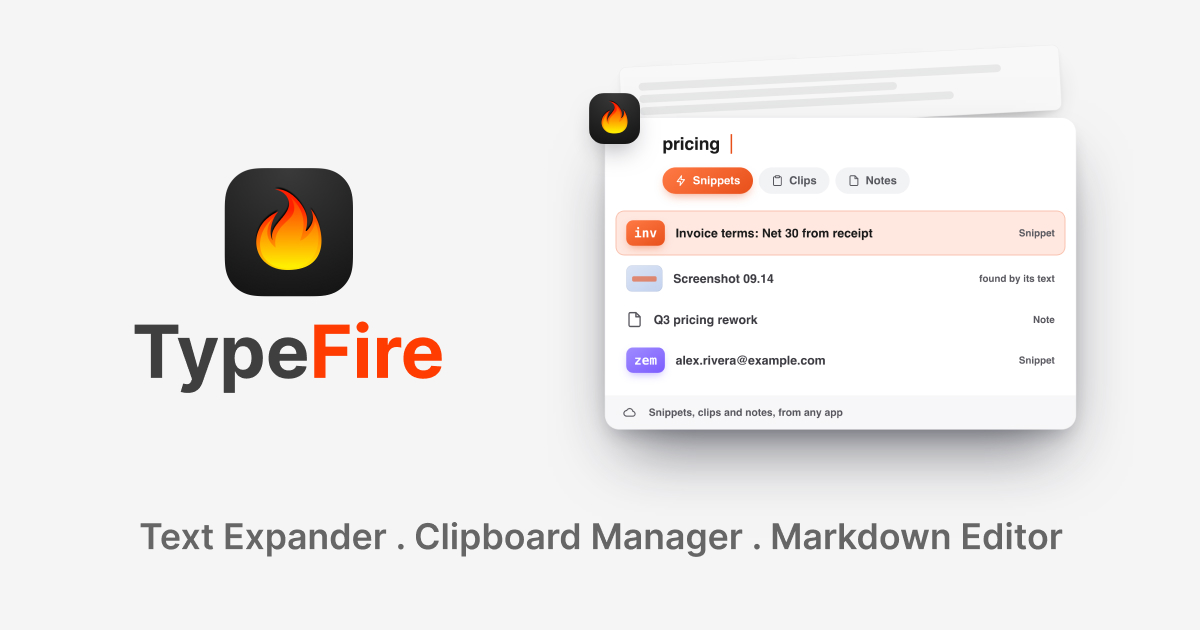
An image in your clipboard history is labeled something like [Image 900x560]. It matches no search, so it is effectively invisible the moment it scrolls off screen. Rename it to "Q3 pricing table" and it is findable forever by a phrase you will actually remember.
Better still, use a manager that runs OCR at capture so the words inside the screenshot become searchable without you doing anything. That removes the habit entirely, which is why it is worth looking for. There is more on searching inside screenshots here.
3. Filter by source app before you scroll
The fastest way to cut a long history down is not search, it is context. You usually remember where you copied something even when you cannot remember the exact words.
"Everything from Figma." "Everything from Slack." "Everything from Terminal." One click each, and a history of four hundred becomes a list of twelve.
Filtering by type works the same way: only images, only files, only colors, only links. If you are a designer hunting a hex value you copied on Tuesday, filtering to colors finds it faster than any search string.
4. Set retention deliberately
Most people leave retention at the default and let the history grow forever. That is how you end up with a pile.
Three ways to bound it, and they suit different people:
- By age. Keep 30 days. Good if your work is project-based and old context stops being relevant.
- By count. Keep the newest 500. Good if you copy at a steady rate and want predictable behavior.
- By disk budget. Never use more than 500MB. The right choice if you copy a lot of screenshots, because images are what actually consume space.
Pick one and stop thinking about it. The point of a bound is that you never have to clean up manually.
The habit that matters most
Here is the thing organizing cannot fix.
If you have deliberately gone hunting in clipboard history for the same item more than once, it is in the wrong place. Clipboard history is recency-based by design, so a recurring item will cost you a search every single time, forever.
That item wants to be a snippet with an abbreviation: type three characters, get the whole thing, no searching at all.
The friction is normally that your clipboard manager and your text expander are different apps, so promoting something means copying it out, switching apps, creating a snippet and inventing an abbreviation. Seven steps to save four seconds a week, which is why nobody does it.
When both live in the same app it is one right-click. There is more on that distinction here.
A ten-minute setup
If you want to do this once and be done:
- Set a retention rule. Disk budget if you screenshot a lot, age otherwise.
- Pin the three or four things you are actively working with this week.
- Rename any image you know you will want again.
- Promote anything you have fetched twice into a snippet with an abbreviation.
Then leave it alone. A clipboard history that is bounded, pinned and searchable stops being a pile and starts being a memory.
Frequently asked questions
What is a clipboard organizer?
A clipboard manager that does more than record what you copied. Beyond a chronological history, it lets you pin items so they never age out, tag or rename them so they are findable later, filter by type or source app, and set rules for what gets deleted and when.
How do I organize clipboard history on a Mac?
macOS Tahoe shows recent copies in Spotlight, but it has no way to organize them, so this requires a clipboard manager. The four things worth using once you have one are pinning for items you need repeatedly, renaming so an image is findable by a name rather than its dimensions, filtering by source app to cut a long history down instantly, and retention rules so the pile does not grow forever.
Why can I not find screenshots in my clipboard history?
Because most clipboard managers store an image without reading it, so it is labeled something like [Image 900x560] and matches no search. The fix is either renaming each one manually, or a manager that runs OCR at capture so the words inside the image become searchable.
Should I keep unlimited clipboard history?
Usually not. Clipboard use is heavily recency-biased, so the thing you want is nearly always from the last few minutes. Unlimited history mostly creates a search problem. Retention by age, count or disk budget keeps it useful, and anything you genuinely reuse should become a text expander snippet instead.
Doing it in one app
TypeFire keeps text, images, screenshots, files, links and colors, with pinning, tags, renaming, source-app and type filters, and retention by age, count or disk budget. Screenshots are read on your Mac at capture, so they are searchable by the words inside them without renaming anything.
It is free for your 10 most recent clips, with every one of those features available rather than held back, and the text expander that closes the loop is free and uncapped.
Download for Mac or see the free clipboard manager page.
Loved by people who type all day.
Unprompted reactions from users, in their own words.
Used by people at
Company names are places where our users work. They do not imply endorsement or affiliation.